

Dental X-Rays
Dental X-rays are an essential diagnostic tool that helps dentists see what cannot be observed during a regular oral examination. They provide detailed images of teeth, roots, jawbone, and surrounding tissues, enabling early detection and accurate treatment planning.
Why Are Dental X-Rays Needed?
Dental X-rays are recommended to:
● Detect cavities between teeth
● Assess the health of roots and bone structure
● Monitor developing teeth in children
● Identify impacted teeth or wisdom teeth issues
● Plan treatments such as braces, implants, or extractions
● Detect infections, cysts, or tumors
Types of Dental X-Rays
● Bitewing X-Rays: Show details of upper and lower back teeth to detect cavities.
● Periapical X-Rays: Focus on the entire tooth from crown to root for detailed assessment.
● Panoramic X-Rays: Capture the entire mouth, including jaws and surrounding structures, in a single image.
● Cone Beam CT (CBCT): 3D imaging for advanced planning of implants, orthodontics, or complex cases.
The Procedure
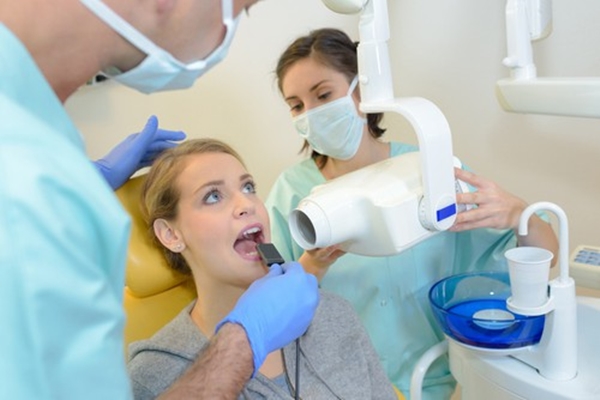
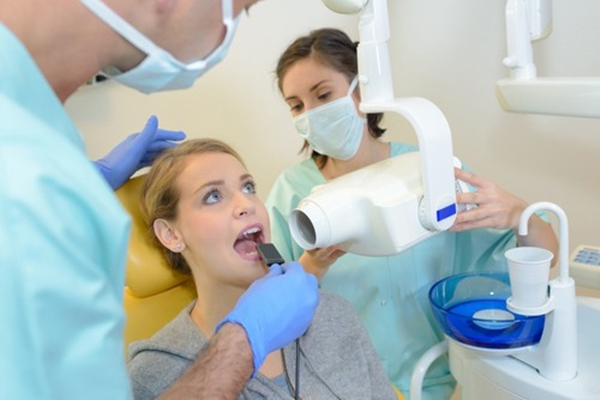
● Quick, safe, and non-invasive
● Uses minimal radiation with modern digital X-ray technology
● Images are reviewed by the dentist to identify problems and plan treatment
Benefits of Dental X-Rays
● Early detection of dental problems before symptoms appear
● Accurate treatment planning for restorative, orthodontic, or surgical procedures
● Helps maintain long-term oral health
● Safe and efficient diagnostic tool
Safety Considerations
Dental X-rays use very low levels of radiation. Protective measures, such as lead aprons, are always used to ensure patient safety, including for children and pregnant patients.
Book Your Appointment